Building a mindfulness tool to help teachers manage stress

During the early days of Covid-19, when schools started meeting virtually, educators were under an alarming amount of stress. As a student-focused social-emotional learning (SEL) company, we expanded our offerings to reach adults, specifically educators who needed the same tools we'd been building for kids.
I led content strategy across the program and solidified our voice and tone guidelines. In post-launch testing, 100% of participants said what they learned about stress management was helpful, and 97% said they now understood how their brain responds to stress.
My role
I led content across registration, onboarding, the learning modules and support, and wrote the voice and tone guidelines that followed everything through. This was an all-hands-on-deck project with few dedicated hands, and task distribution got creative. Everyone, myself included, worked outside their usual swim lane.
Teachers told us why this mattered
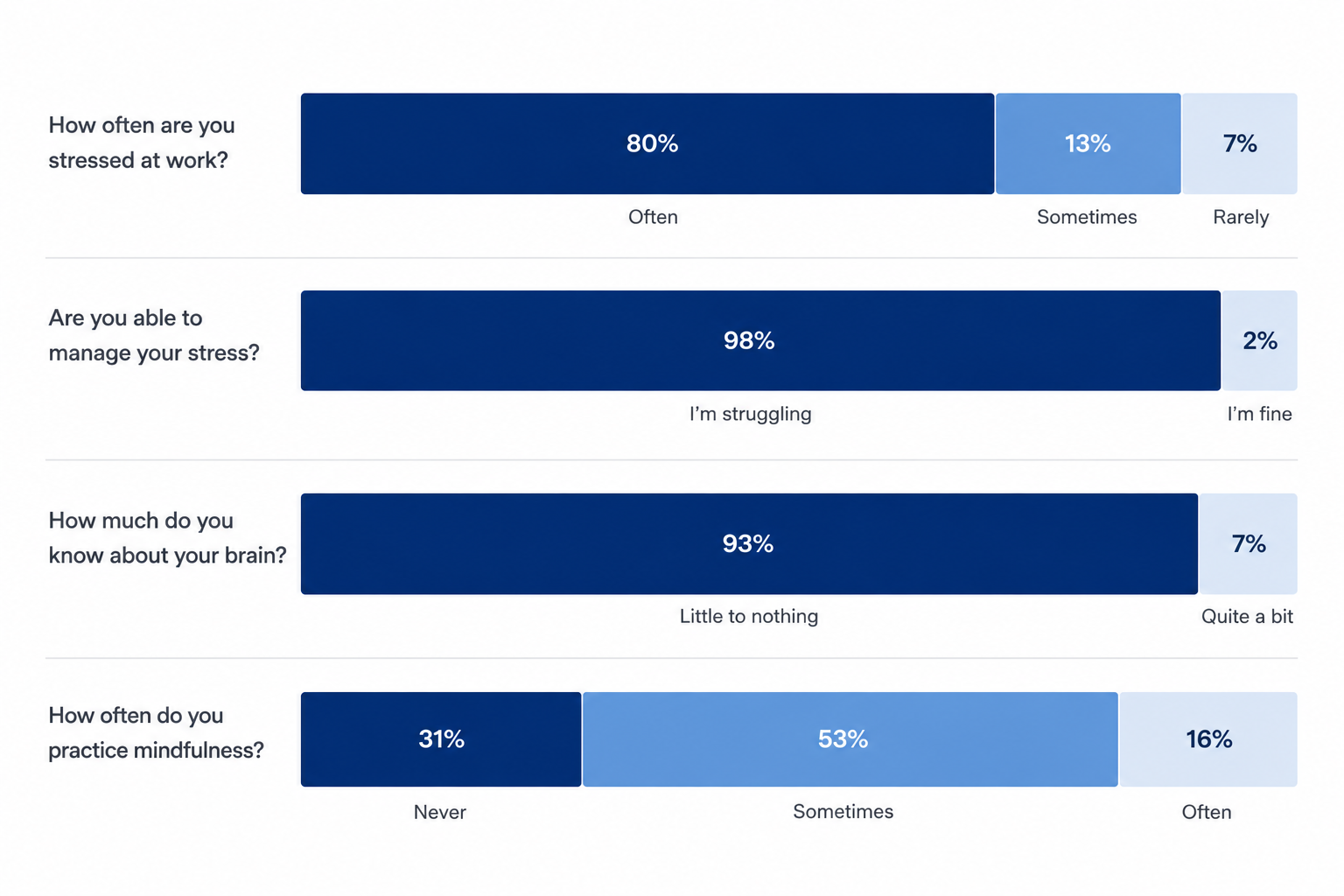
Using surveys and interviews, 392 teachers and school staff within our network told us firsthand what their stress load looked like.
93% said they were stressed at work
98% said they struggled to manage it
93% knew little or nothing about how their brains responded to stress
69% said they practiced mindfulness sometimes or often
One teacher comment perfectly said what many indicated: "We want to be there for our students, but we're exhausted and fighting burnout."
Adapting our program for adults
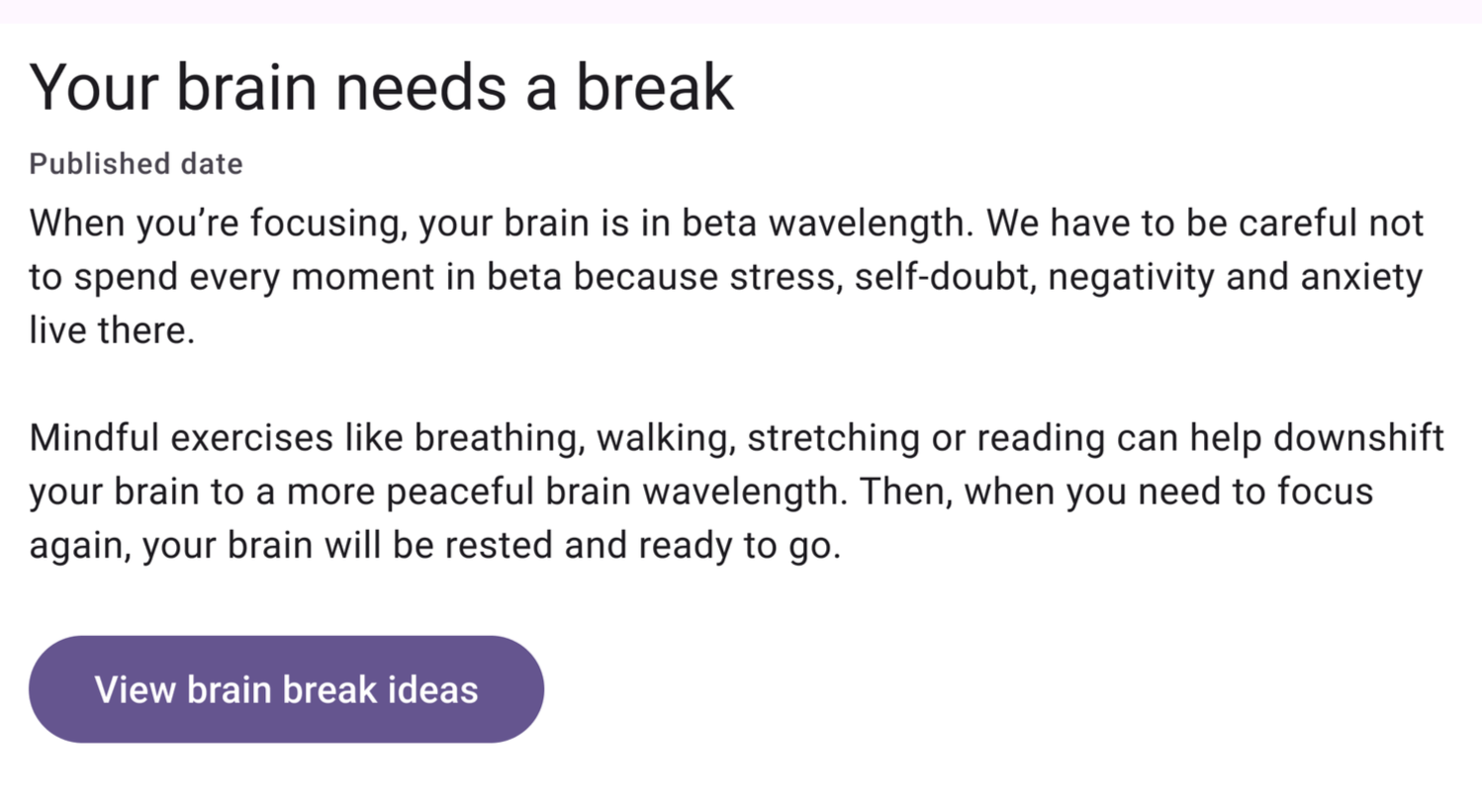
Our SEL curriculum already taught kids how their brains respond to stress, but we needed to adapt it for adults who were already overwhelmed. A seasoned educator on our team led the work of translating it, reworking twelve topics for school staff who needed the same tools we'd already built for kids.
Strategy of our voice and tone
I solidified three voice attributes and they carried the voice and tone of every part of the program.
Understanding. We validate your stress load. We won't bog you down with work.
Trustworthy. What we will share is backed by science.
Empowering. We believe in you. You are our heroes.
We found ourselves really leaning in to how we were supporting the ones who gave so much support to the young people in the world. So often voice and tone guidelines become a dusty relic, but these were front and center.
Meeting all teachers
Some teachers told us they couldn’t participate if there wasn’t a printable version. Learning a new digital program wasn't something they had the capacity for while they were struggling to come up for air.
It was an edge case, but we added printable PDFs into our delivery roadmap, adapting a format we'd already created for our SEL curriculum. This added a big layer of ensuring the people who printed had just as great of an experience as those who used our digital program.
Usability testing
We did unmoderated usability testing with a small group volunteer educators, mostly observing where the process and the content needed to simplify.
Two findings mattered most:
Self-registration and sign-in had varying levels of comfort. We added support copy and a phone number to contact support.
Leader onboarding was critical. The program asked for a volunteer school staff member to lead the school in this program. This could make or break the experience and we learned the support that we were offering was adding more stress. Less was definitely more here.
Further testing
After implementing those changes, we rolled out to a cohort of approximately 700 educators. The same educators who responded to our original stress survey were a part of this group. This was great because we could follow whether our product actually helped the people whose feedback helped build the product.


Outcomes
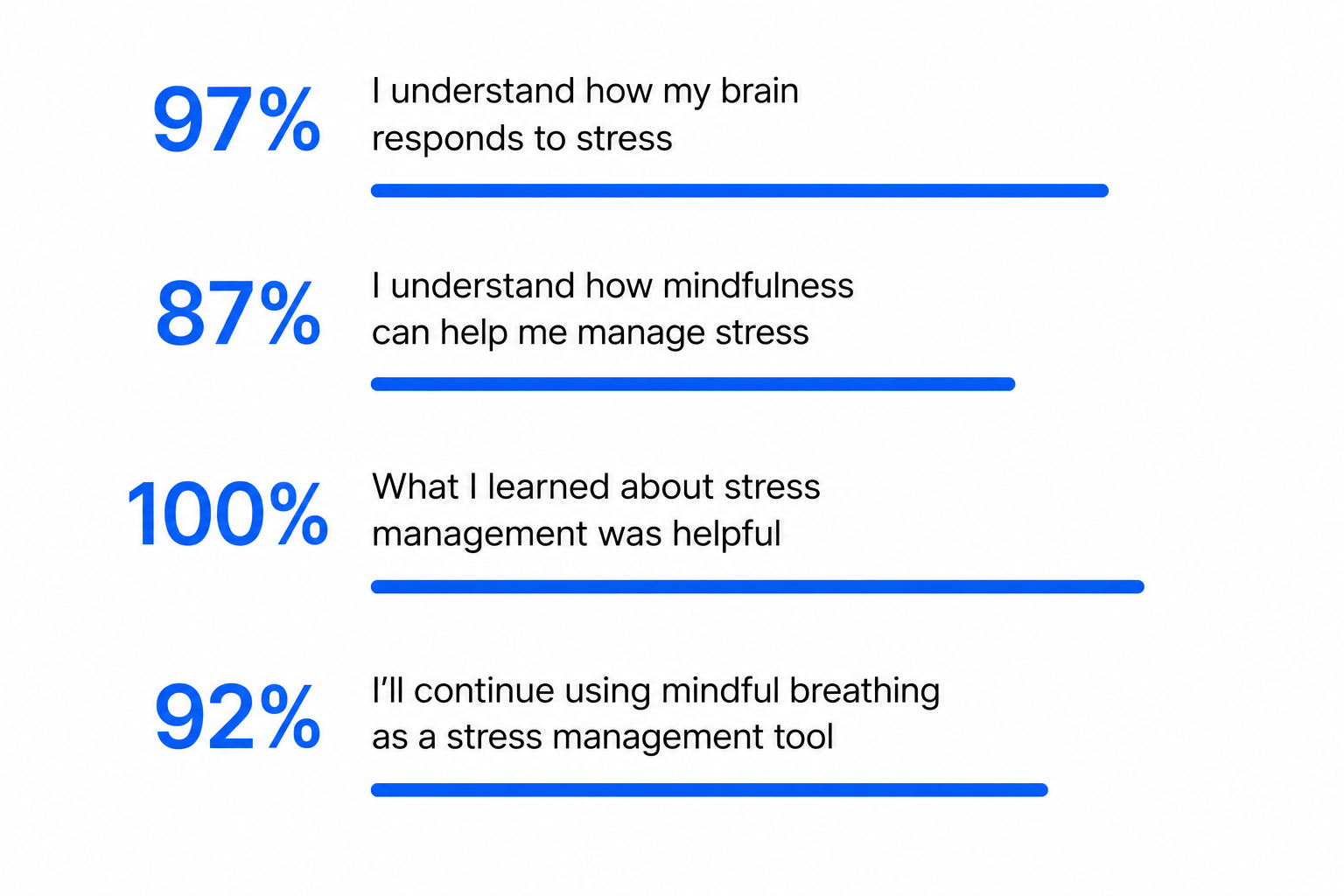
At the end of the program, we reviewed completion survey results:
97% said they now know more about how their brain responds to emotions and stress
87% said their understanding of how mindfulness can help them manage stress had grown.
100% said the information they learned about stress management was helpful.
92% said they'll use mindful breathing to manage stress going forward.
Two of the participant responses:
"This has allowed me to understand my stress more clearly. It is no longer hazy and indistinct, which means that I feel more empowered to develop strategies to deal positively with it."
"I now start every day with breathing exercises. I practice them to try and center myself before I dive into the chaos."
Small businesses and organizations got on board to sponsor the fee for schools, which was a win for all.
Reflection
Scrappy teams are the best teams. There isn't always someone with perfect experience, and getting creative with task distribution creates real opportunities to learn and grow.
This product followed a waterfall process because we had so few hands to work on it, on a unique and quick timeline. It reinforced my preference for agile practices and sprint work, but waterfall exists for a reason.
There was so much knowledge gained from research and data mining. Choosing the path of an educator is not easy, and my appreciation for educators grew tremendously during this project. It solidified my reliance on research and changed how I think about educators for good.